

Stephanie Schweitzer Dixon M.S.
Behavioral Health Expert
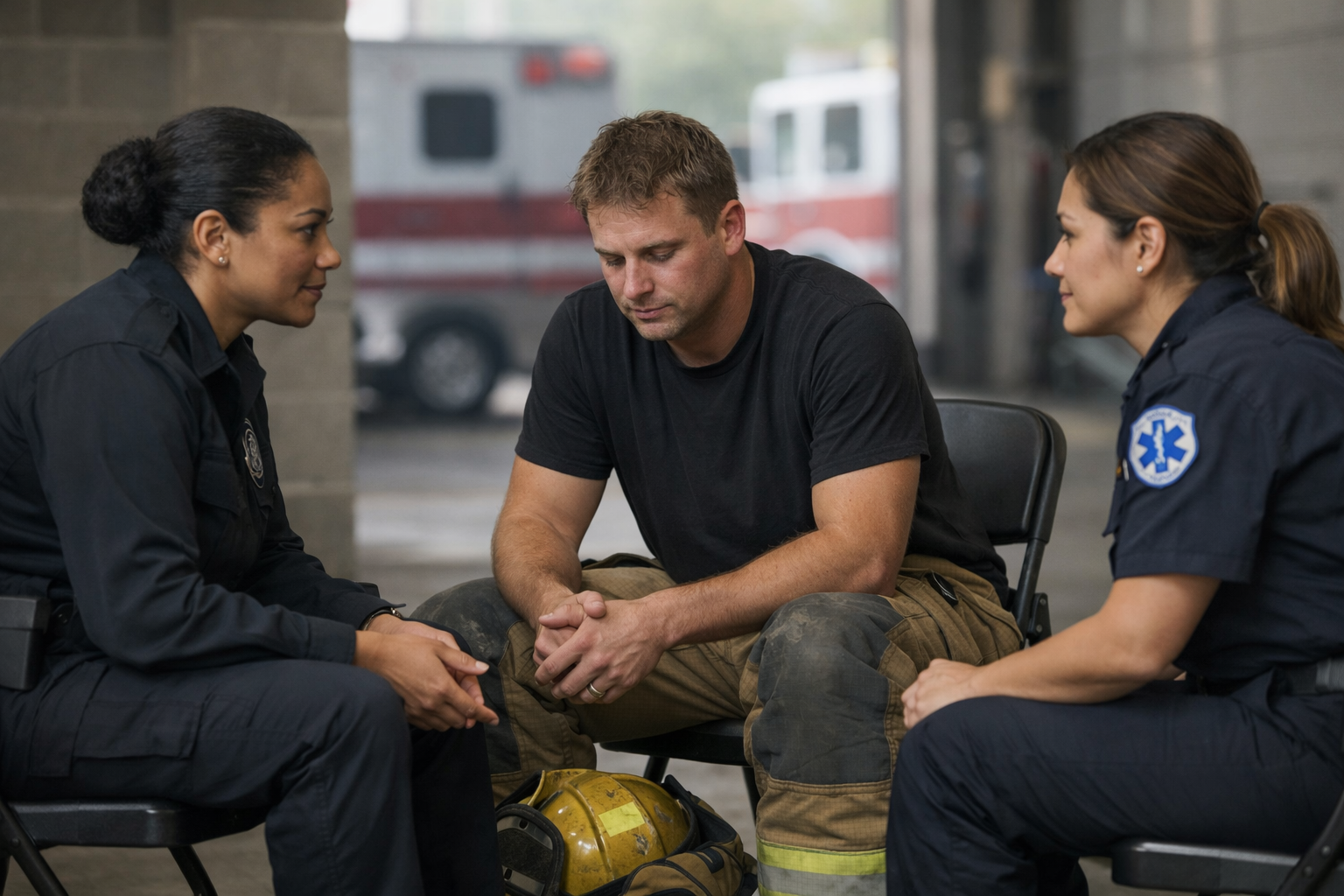
When a critical incident occurs—whether a line-of-duty death, a traumatic call, a mass casualty event, or a colleague's suicide—the hours and days that follow are crucial. Peer support, delivered by trained colleagues who understand the unique pressures of the job, can be a lifeline during these moments. This article provides step-by-step protocols for peer support team members responding to critical incidents.
Understanding Critical Incident Stress
A critical incident is any event that overwhelms an individual's normal coping mechanisms. For first responders and high-stress professionals, these may include: death or serious injury of a colleague, incidents involving children, mass casualty events, prolonged or failed rescue operations, events with significant media attention, or personal identification with the victim. The stress response to these events is normal—it's the event that is abnormal.
Critical Incident Stress can manifest physically (fatigue, headaches, GI distress, sleep disturbances), cognitively (difficulty concentrating, intrusive thoughts, confusion), emotionally (anxiety, guilt, anger, numbness), and behaviorally (withdrawal, increased substance use, hypervigilance). Understanding these reactions helps peer supporters normalize the experience for their colleagues.
The Role of the Peer Supporter
Peer supporters are not therapists—they are trusted colleagues trained to provide psychological first aid, normalize reactions, and facilitate access to additional resources when needed. The peer supporter's role includes: providing a non-judgmental listening ear, validating and normalizing stress reactions, sharing coping strategies, identifying those who may need professional support, and maintaining confidentiality within appropriate limits.
Effective peer support is built on the foundation of relationship and shared experience. The implicit message is: 'I understand what you're going through because I've been there too. You're not alone.'
Phase 1: Immediate Response (0-24 Hours)
The immediate aftermath of a critical incident requires a rapid, organized response. Key actions include:
• Assess the scene: Ensure physical safety first. Coordinate with incident commanders about when and how to approach affected personnel.
• Provide practical support: Sometimes the most helpful actions are practical—ensuring someone has a ride home, food, a phone charger, or coverage for their next shift.
• Create a calm presence: Your demeanor sets the tone. Speak calmly, move deliberately, and model regulation even if you're also affected by the event.
• Listen without forcing conversation: Some individuals will want to talk; others won't. Both responses are normal. Your presence alone communicates support.
• Avoid platitudes: Statements like 'Everything happens for a reason' or 'At least no one else was hurt' can feel dismissive. Instead, acknowledge the difficulty: 'This is an incredibly hard situation.'
• Identify immediate needs: Does anyone need medical attention? Is anyone displaying signs of acute stress (dissociation, panic, inability to function)?
• Brief leadership: Communicate observed needs to incident commanders and mental health professionals if available.
Phase 2: Short-Term Support (24-72 Hours)
In the days following a critical incident, peer support efforts shift to ongoing monitoring and connection:
• Check in regularly: Brief, non-intrusive check-ins communicate ongoing care. A text saying 'Thinking of you—no need to respond' can be powerful.
• Normalize reactions: Help colleagues understand that what they're experiencing is a normal response to an abnormal event. Education about stress reactions reduces fear and shame.
• Encourage basic self-care: Remind colleagues to eat, hydrate, rest, and limit alcohol. These basics are often neglected during acute stress.
• Facilitate connection: Group gatherings—informal meals, debriefs, or memorial activities—help combat isolation and rebuild unit cohesion.
• Watch for warning signs: While most people recover naturally, some may develop more persistent difficulties. Signs requiring referral include: persistent dissociation, inability to perform basic functions, expressed hopelessness or suicidal ideation, severe substance use, or withdrawal from all support.
• Coordinate with formal resources: Ensure affected personnel know about EAP services, chaplaincy, and mental health resources. Help reduce barriers to access.
Phase 3: Ongoing Support (1 Week - 3 Months)
Critical incident stress often follows a delayed trajectory. Initial adrenaline and numbness may give way to delayed reactions:
• Continue periodic check-ins: Don't assume that silence means someone is fine. Anniversary reactions and delayed stress responses are common.
• Support return to duty: The transition back to normal operations can be challenging. Check in about how the first shifts back are going.
• Address secondary stressors: Investigations, media coverage, legal proceedings, and organizational responses can create ongoing stress. Acknowledge these additional burdens.
• Recognize cumulative stress: A single critical incident may be the tipping point for accumulated stress from years of exposure. Be alert to this possibility.
• Know when to refer: If symptoms persist beyond 30 days or significantly impair functioning, encourage professional consultation. Frame this as strength, not weakness.
Communication Techniques for Peer Supporters
Effective peer support relies on skilled communication. Key techniques include:
Active Listening: Give full attention, maintain appropriate eye contact, and use verbal and non-verbal cues to show you're engaged. Avoid interrupting or planning your response while the other person is talking.
Reflective Responses: Mirror back what you're hearing to ensure understanding and demonstrate empathy. 'It sounds like you're feeling overwhelmed by...' or 'What I'm hearing is that...'
Open-Ended Questions: Encourage deeper sharing with questions that can't be answered with yes or no. 'What's been the hardest part for you?' or 'How are you really doing?'
Validation: Acknowledge the legitimacy of the person's feelings without judgment. 'It makes sense that you'd feel that way given what you experienced.'
Silence: Don't feel compelled to fill every pause. Silence gives space for processing and often leads to deeper sharing.
Self-Care for Peer Supporters
Supporting colleagues through critical incidents takes a toll. Peer supporters must practice what they preach:
• Set boundaries: You cannot be available to everyone all the time. Know your limits and communicate them.
• Use your own support network: Peer supporters need peer support too. Connect with fellow team members and your own trusted colleagues.
• Monitor your own reactions: Pay attention to signs that you're being affected—sleep changes, irritability, intrusive thoughts about the incident.
• Practice self-compassion: You cannot fix everything. Your role is to support, not to solve. Accept that you will sometimes feel helpless.
• Seek supervision or consultation: Regular check-ins with mental health professionals or experienced peer support coordinators help maintain perspective and skill.
When to Escalate
Peer support has limits. Immediately escalate to professional resources when you observe: expressed intent to harm self or others, psychotic symptoms (hallucinations, delusions, severe disorganization), severe dissociation or inability to function, physical health concerns requiring medical attention, or situations beyond your training or comfort level. There is no shame in recognizing the limits of peer support—knowing when to refer is a core competency.
Conclusion
Peer support after critical incidents is both an art and a science. It requires knowledge of stress reactions and recovery, skill in crisis communication, and most importantly, genuine human connection built on shared experience and trust. When delivered effectively, peer support can significantly reduce the long-term psychological impact of traumatic events and reinforce the message that no one has to face these challenges alone.
Remember: Your presence matters. Your listening matters. Your care matters. In the aftermath of the worst moments, peer supporters help colleagues find their way back to stability, functioning, and hope.